


We use cookies to ensure the site functions properly and, with your consent, to measure traffic and improve your experience. You can change your choices at any time via the cookie settings link at the bottom of each page. Privacy policy
Wedding: rethinking floral design, differently
JPHM
Team Chou et Tournesol
7 min
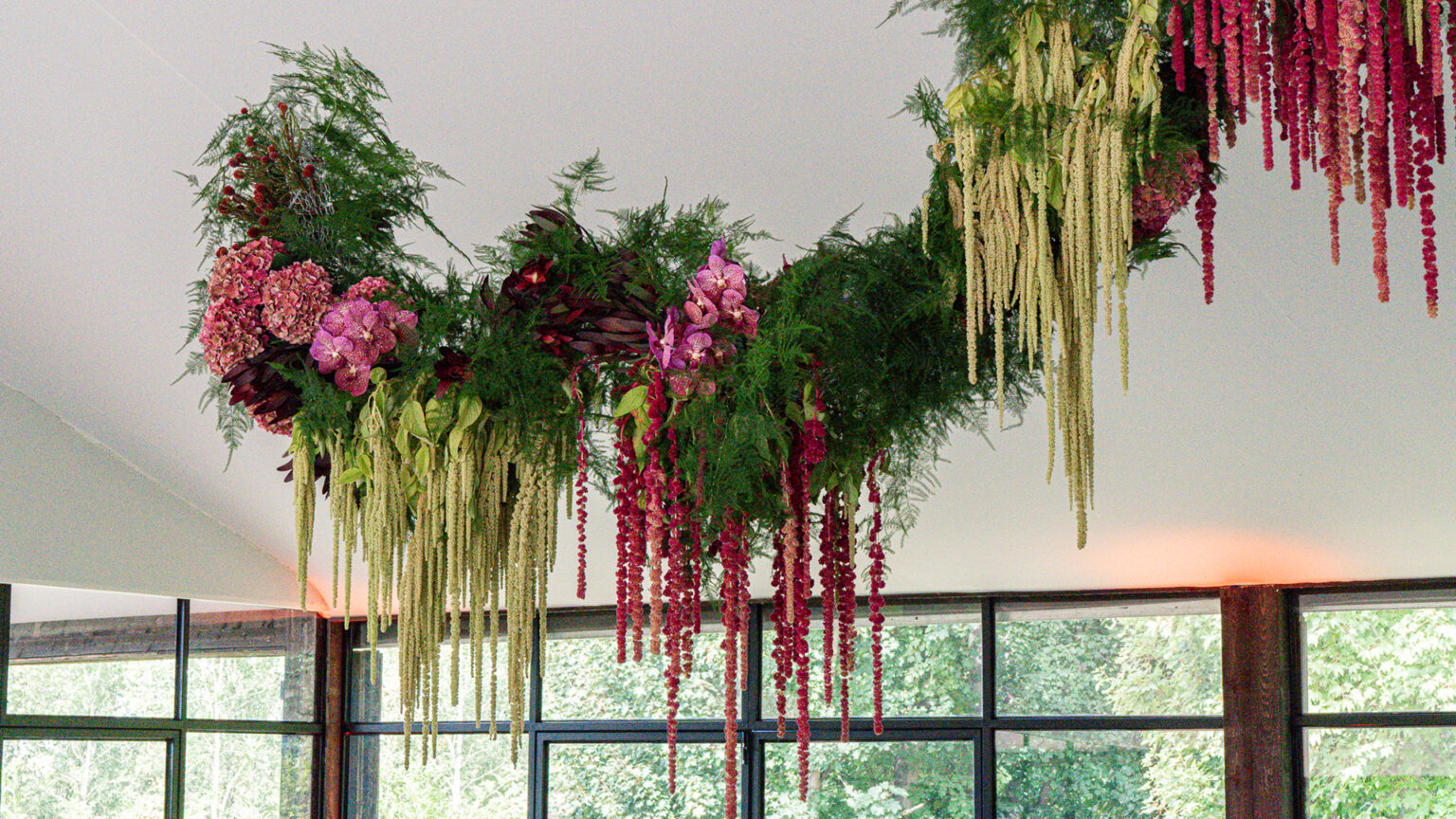
For a long time, wedding florals followed a set of familiar codes: table centrepieces, bouquets, a floral arch. In 2026, those reference points are evolving. A wedding becomes a complete mise-en-scène—an ephemeral creation shaped around emotion, a venue, and a story that exists nowhere else.
To speak of a “scenographed wedding” is to shift perspective: it is no longer about decorating an event, but about staging a once-in-a-lifetime moment.
1. A wedding as an experience, not as decor
A wedding is not a sequence of beautifully decorated spaces. It is something lived—from the very first glance to the last shared second.
Scenography allows a wedding to be designed as an emotional journey:
-
A ceremony that sets the atmosphere from the moment guests arrive
From the first steps inside, floral scenography defines the tone and draws guests into the emotional world of the day.
-
A cocktail reception that invites discovery and flow
Spaces are shaped to encourage movement, encounters and curiosity—without breaking the visual continuity.
-
A dinner and evening that evolve with light and rhythm
Scenography supports the different chapters of the celebration, transforming subtly as the day turns into night.
Each space becomes a scene, each moment a clear intention. Florals are not an “add-on”—they structure the experience.
2. Flowers as scenographic raw material
In a scenographed wedding, flowers shift status. They are no longer ornaments, but materials to build with.
They can be suspended, reimagined beyond their traditional use, integrated into wooden, metal or textile structures, or used as masses, lines, or sculptural accents.
This approach moves beyond the expected “pretty” and creates floral installations with presence—sometimes surprising, always aligned with the venue and the couple’s story.
3. Creating a visual universe that tells a story
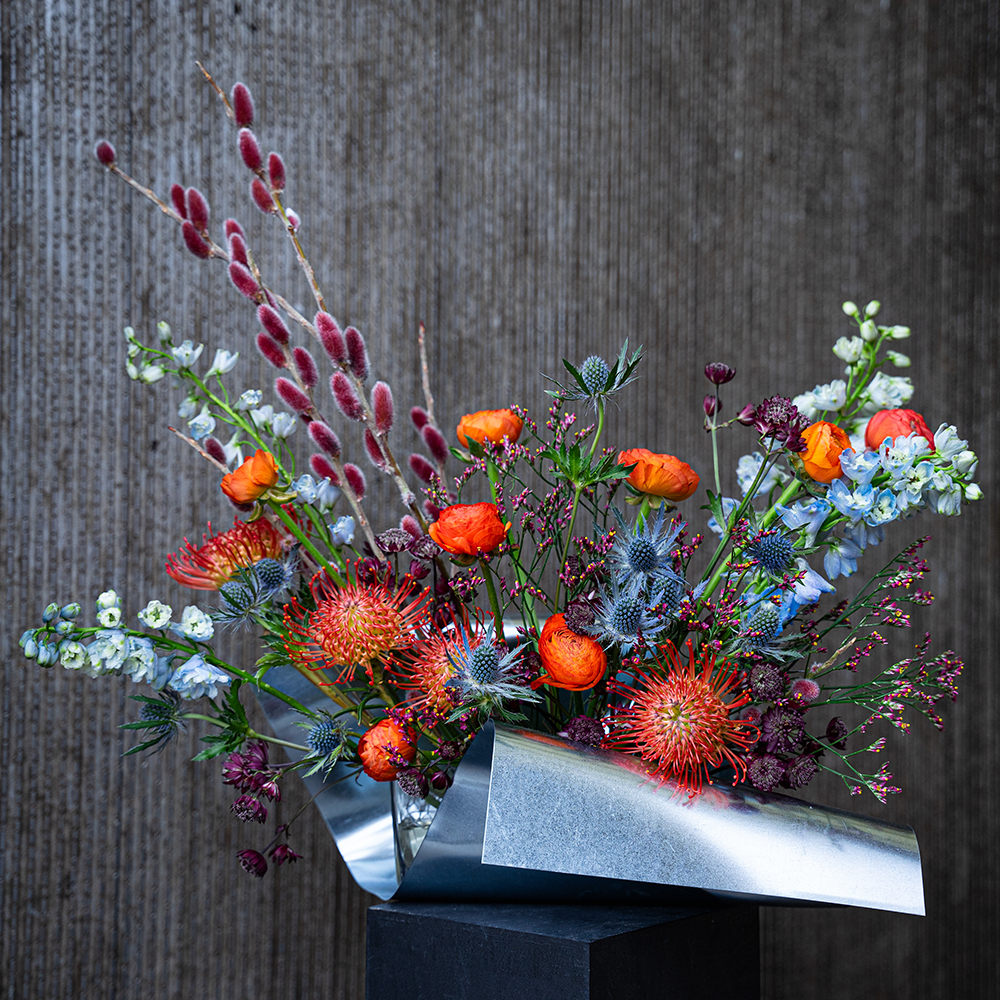
Wedding floral scenography is not about following a trend. It is about building a narrative. Every choice—colours, textures, volumes, materials—contributes to a coherent, personal world.
Rather than multiplying elements, the key is to:
-
Define a clear emotional palette
Colours are selected to express a precise atmosphere and support the wedding’s intention.
-
Play with contrast or softness
Bold tension and subtle harmony coexist, giving the overall design character and depth.
-
Let the space breathe to elevate every detail
Negative space becomes a scenographic tool, amplifying the impact of each element chosen.
The result is not a “perfect” decoration, but a living universe that reflects the couple’s energy, sensitivity and uniqueness.
4. Beyond the table: designing the venue as a whole
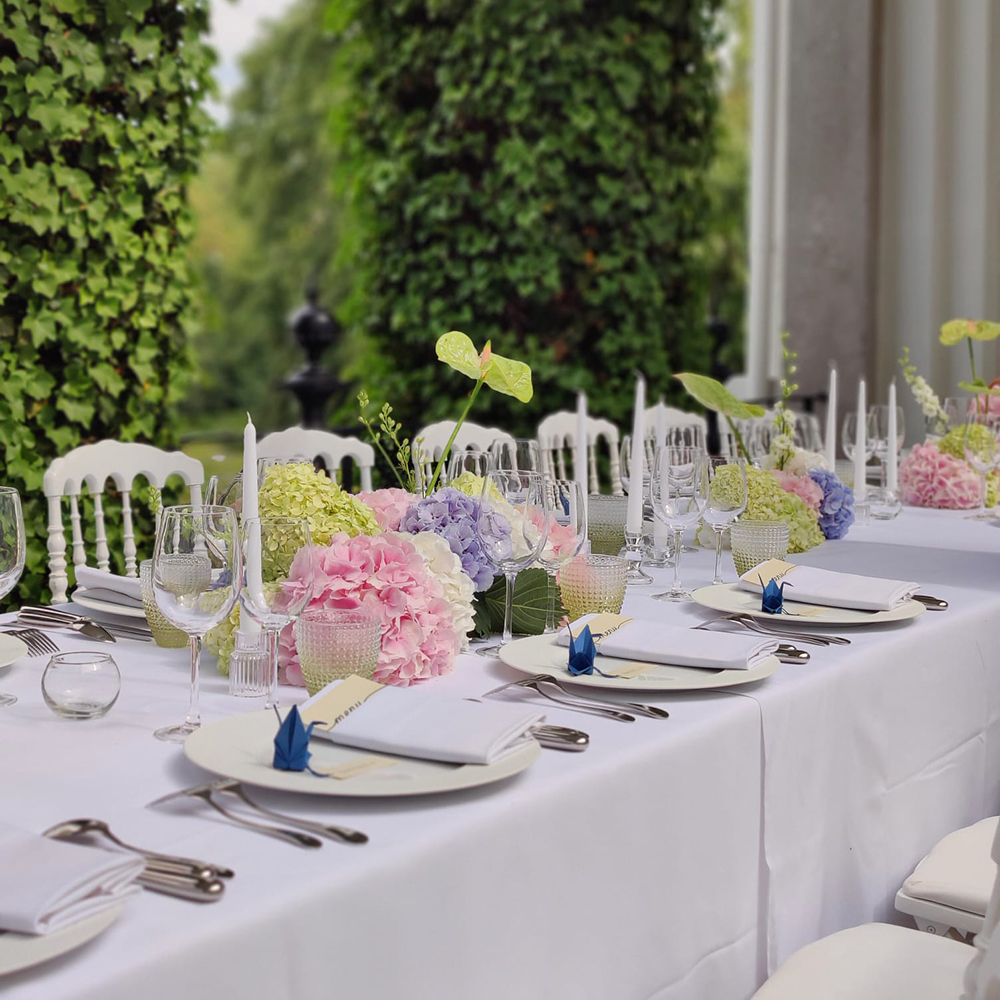
Rethinking florals also means stepping away from the table as the main focus. Floral scenography can take over the entire venue: entrances, corridors, outdoor areas, ceilings, height, perspectives—and even the “empty” zones that are often overlooked, yet essential to balance.
Centre pieces become one element within a wider composition. The eye moves, the space gains depth, and the venue transforms—without losing its own identity.
5. A bespoke wedding, balancing emotion and precision
A scenographed wedding relies on a delicate balance: creative boldness and flawless precision.
Each project requires:
-
Attentive listening to the couple’s desires and sensibilities
Every story begins with understanding who the couple are, and what they want to feel.
-
A precise reading of the venue and its constraints
Scenography adapts to architecture and context, revealing the venue’s full potential without altering its character.
-
Rigorous execution, from set-up to dismantling
Technical control ensures the day unfolds with calm, fluidity and peace of mind.
That level of mastery gives creativity the space to truly shine—without stress, without last-minute improvisation. On the day itself, everything feels effortless, natural and obvious… even though every detail has been carefully designed long before.
Conclusion
Rethinking floral design means giving a wedding a new dimension: an emotional scenography—refined, sensitive and deeply personal.
At Chou & Tournesol, every wedding is crafted as an ephemeral work of art, where flowers, materials and light come together to stage what truly matters: the emotion of a unique moment, lived and shared.
Blog
Featured articles
-
 Corporate
Creating a memorable event scenography for a brand
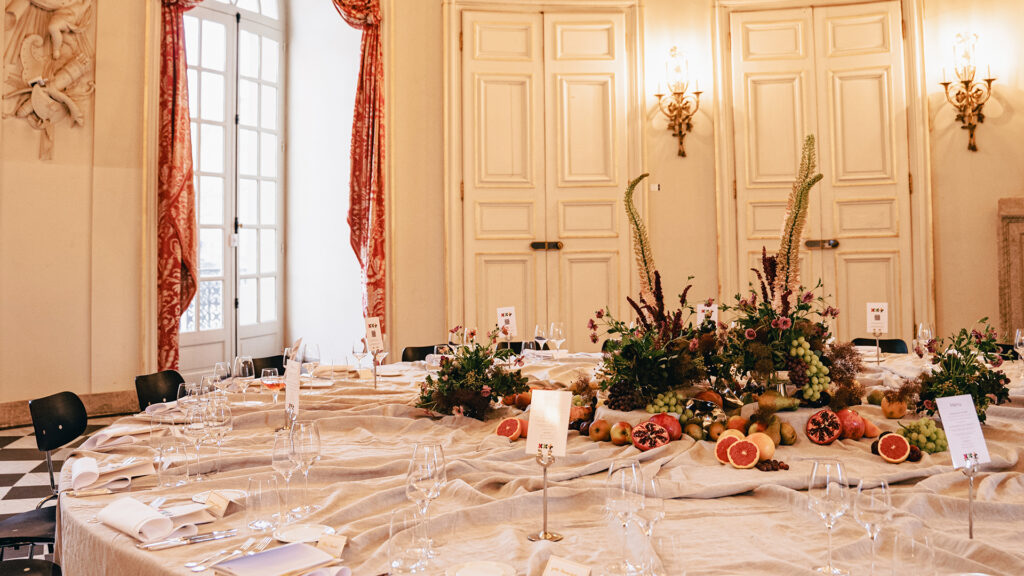
Creating event scenography for a brand is not about decorating a venue—it’s about staging identity. Through design, scale, lighting and materials, scenography turns an event into an immersive experience that leaves a lasting impression and strengthens the brand message.
-
 Trends
The biggest floral design trends for 2026
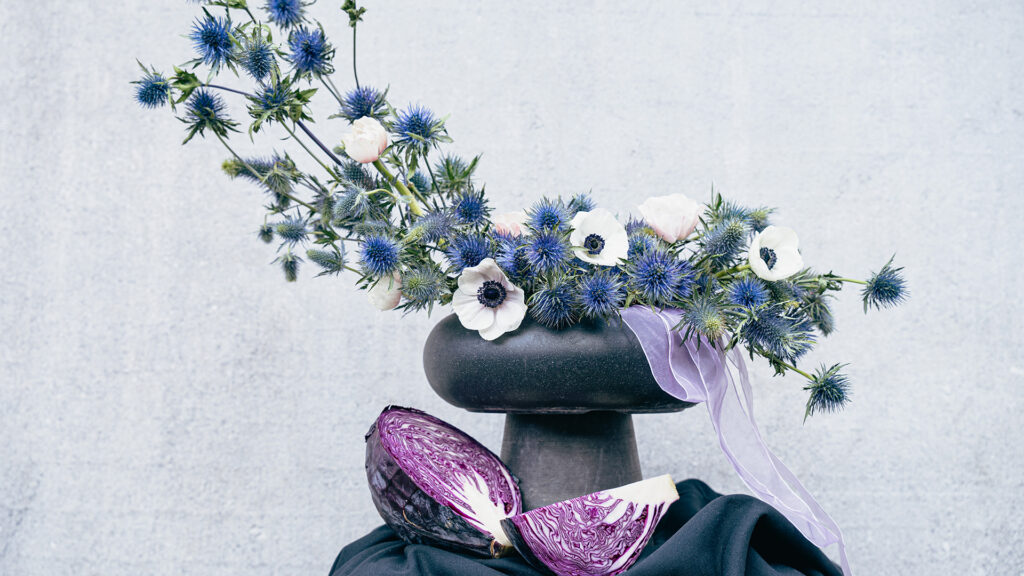
In 2026, floral scenography moves beyond decorative codes to become a truly immersive experience. Sculptural installations, emotional colour palettes, material contrasts and a more responsible approach turn flowers into a scenographic language—shaping unique, memorable worlds.