


We use cookies to ensure the site functions properly and, with your consent, to measure traffic and improve your experience. You can change your choices at any time via the cookie settings link at the bottom of each page. Privacy policy
Creating a memorable event scenography for a brand
JPHM
Team Chou et Tournesol
7 min
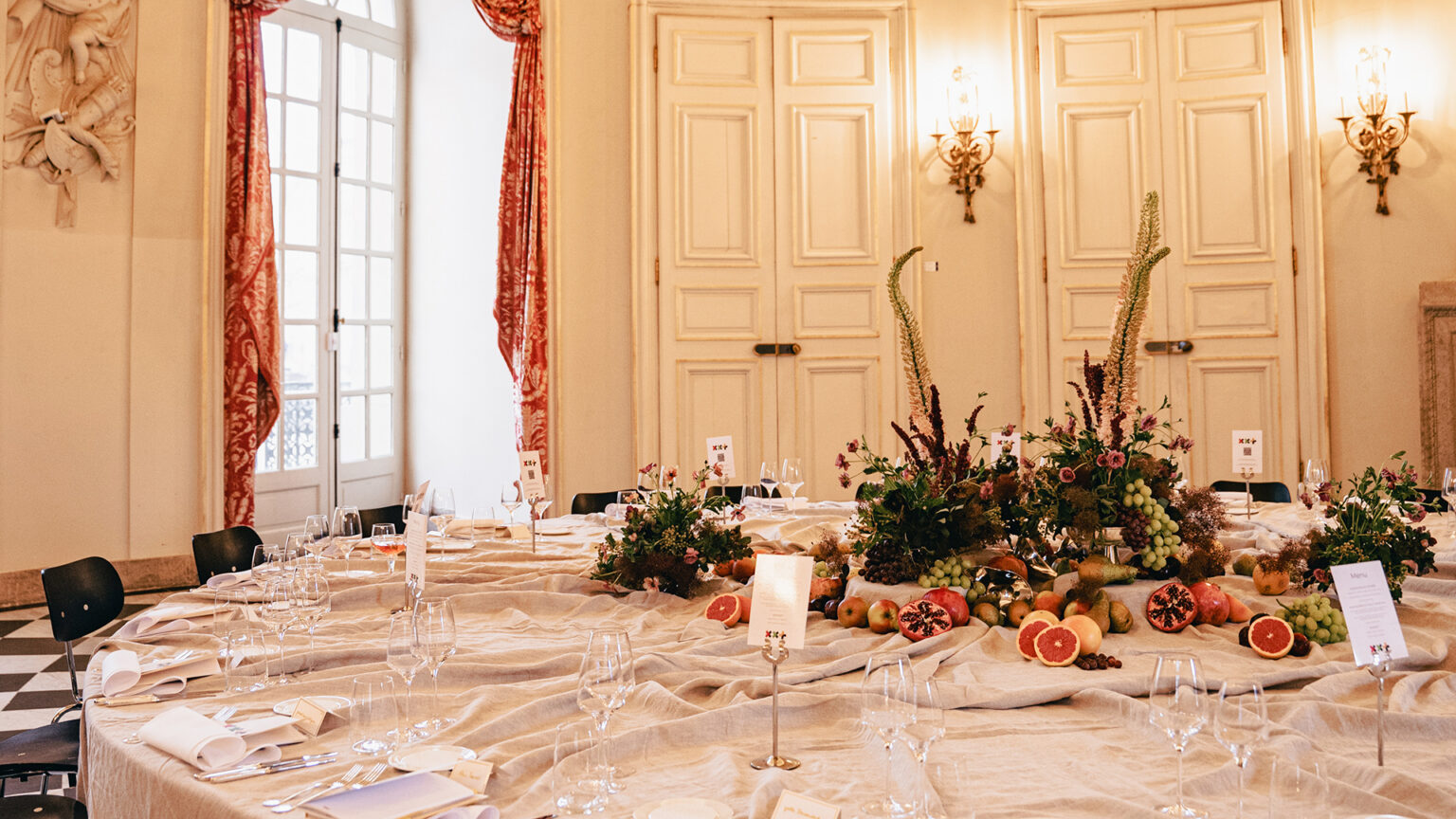
In the age of shared experiences, a brand event can no longer be purely functional or simply beautiful. It needs to leave a mark, spark engagement, and tell a story.
That is exactly where event scenography comes in: a powerful tool to turn a fleeting moment into a memorable experience, filled with meaning and emotion.
A successful scenography is not about “decor”. It is about staging—at the intersection of design, storytelling and brand strategy.
1. Think of the event as a stage, not a space
A common mistake is to approach an event as a venue to “dress up”. Memorable scenography starts with a shift in perspective: the space becomes a stage, and every guest becomes part of the experience.
Event scenography does not simply fill a space. It guides attention, shapes movement, and sets the rhythm of the event.
Before thinking about visuals, it is essential to ask the right questions:
-
What message should the brand communicate?
Scenography should translate the brand’s message into a visual language—immediate, intuitive and impactful.
-
What emotion should remain after the event?
Beyond the moment itself, the staging must leave a lasting emotional imprint, extending the experience into your guests’ memories.
-
How will your audience move, observe and interact?
The space should be designed as a seamless journey, where every viewpoint and interaction strengthens understanding and impact.
Event scenography does not simply fill a space. It guides attention, shapes movement, and sets the rhythm of the event.
2. Translate the brand’s DNA into a visual language
A strong scenography is always aligned with brand identity. It does not replicate it literally—it interprets it.
Colours, materials, volumes, lighting, floral choices or architectural elements: every detail should echo the brand’s values, positioning and tone. A bold brand may embrace striking contrasts and statement installations. A more institutional brand may choose subtle, controlled staging—just as powerful, but with a different kind of presence.
The key is to avoid generic decor. Memorable scenography is specific: designed for one brand, one moment, and one context.
3. Create an immersive, multi-sensory experience
Today, a brand event is experienced as much as it is observed. Scenography plays a central role in building immersion.
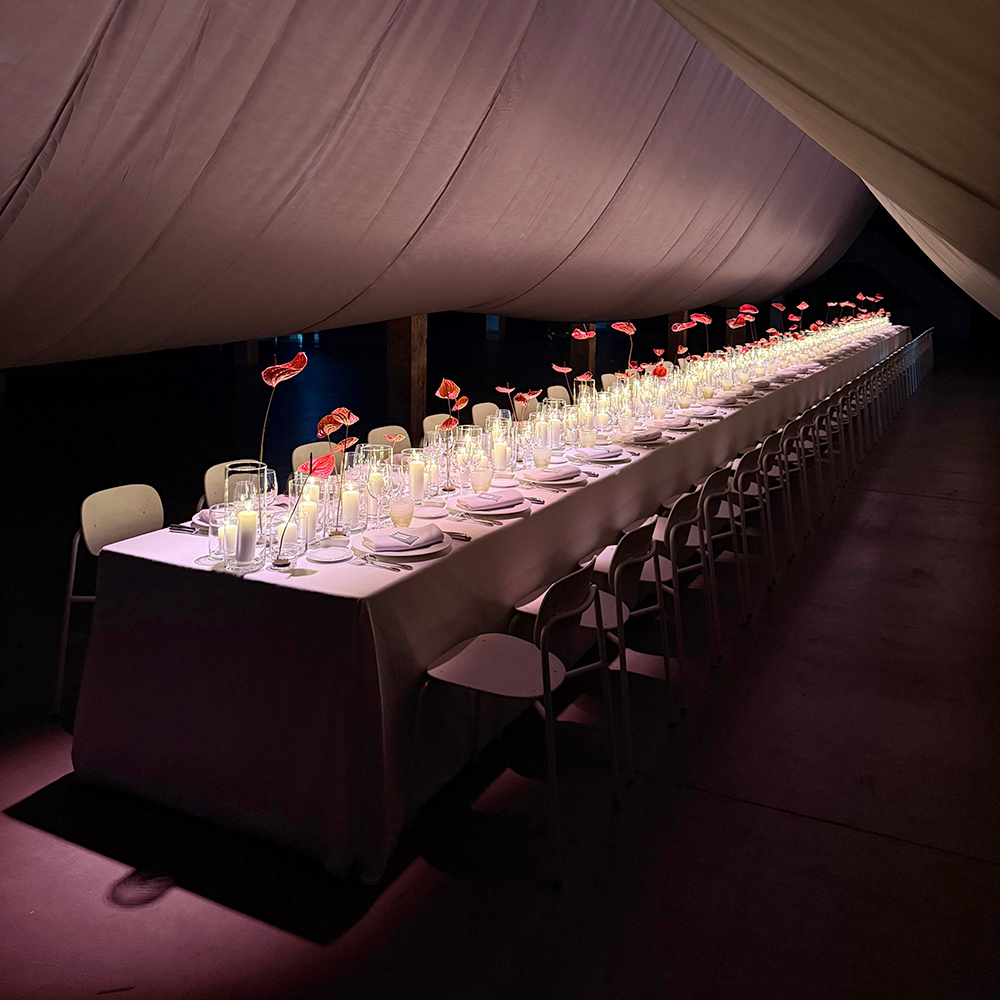
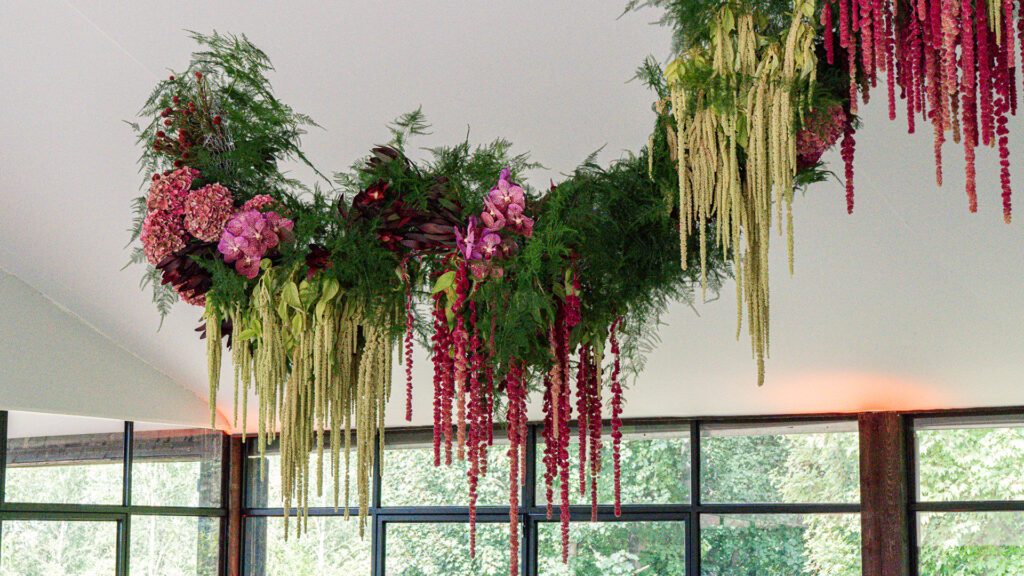
Floral installations, for example, are no longer just arrangements. They become scenographic elements—integrated into structures, suspended, monumental, or reimagined beyond their traditional use.
Beyond aesthetics, staging engages the senses:
-
Lighting to build atmosphere and highlight key moments
Light structures the space and the pacing of the event, supporting key sequences and reinforcing the desired mood.
-
Materials to bring texture and depth
Floral, textile or raw materials add a tactile dimension to the scenography and make the brand universe feel tangible.
-
Volumes to create structure and surprise
Working with scale and volume draws the eye, creates focal points, and transforms the venue into a clear, impactful stage.
The goal is not to do more—it is to build a coherent atmosphere that captures attention and strengthens the brand message.
4. Use scenography as a lever for memorability
Effective event scenography leaves a lasting impression. It is often what guests remember, photograph and share.
To achieve that, it should create strong focal points, deliver genuine “wow” moments without feeling forced, and integrate naturally into the overall experience.
Memorable scenography does not overpower the event’s content. It supports it, elevates it and amplifies it. Long after the event ends, it remains a powerful lever of brand recall.
5. Balance creativity with flawless execution
Finally, successful scenography relies on a crucial balance: creative boldness and operational excellence.
From concept to final dismantling, every step matters:
-
A deep understanding of the brief and brand objectives
Every project begins with attentive listening, ensuring the scenography aligns with the brand’s strategic goals.
-
A clear and shared visual direction
A common visual language creates alignment and clarity before moving into production and build.<br>
-
Seamless technical and logistical coordination
Rigorous execution allows creativity to shine—without friction or surprises on the day of the event.<br>
-
Respect for the venue, timing and budget
A strong scenography adapts to the realities of the project to deliver an impactful, controlled and smooth result.
This level of control is what allows creativity to fully express itself—without compromising quality or the guest experience.
Conclusion
Creating a memorable event scenography for a brand is much more than decorating a venue. It is about staging identity, translating a message into emotion, and turning an event into an experience people will remember.
At Chou & Tournesol, every project is approached as a creative exploration—where flowers, materials, light and space come together to tell a story: your brand story, lived and felt by your audience.
Blog
Featured articles
-
 Trends
The biggest floral design trends for 2026
In 2026, floral scenography moves beyond decorative codes to become a truly immersive experience. Sculptural installations, emotional colour palettes, material contrasts and a more responsible approach turn flowers into a scenographic language—shaping unique, memorable worlds.
-
 Wedding
Wedding: rethinking floral design, differently
What if wedding florals became true staging? Through scenography, flowers move beyond decoration to shape the space, tell a story and create a uniquely emotional experience—designed around the venue and the couple’s identity.